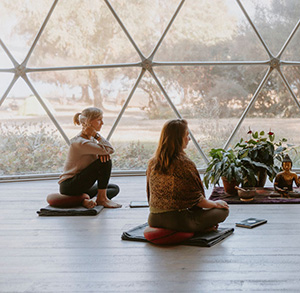
Sivananda Meenakshi ashram, Tamil Nadu, India
Madurai, south India in September, it looks like I didn’t do my research properly – maybe I did vaguely search ‘Chennai weather’ once and when I saw it was going to be hot just thought oh well India is hot. However a low of 28° at night and a high of 37° in the day, actually is hot. I’m staying in the Sivananda yoga Vedanta ashram which is in a very rural area in a state called Tamil Nadu. Being an ashram there are strict dress codes which means no singlets no shorts. 37° wearing long pants and a long dress over the top, hmmm…… hot, very hot. No aircon, big noisy ceiling fans everywhere.
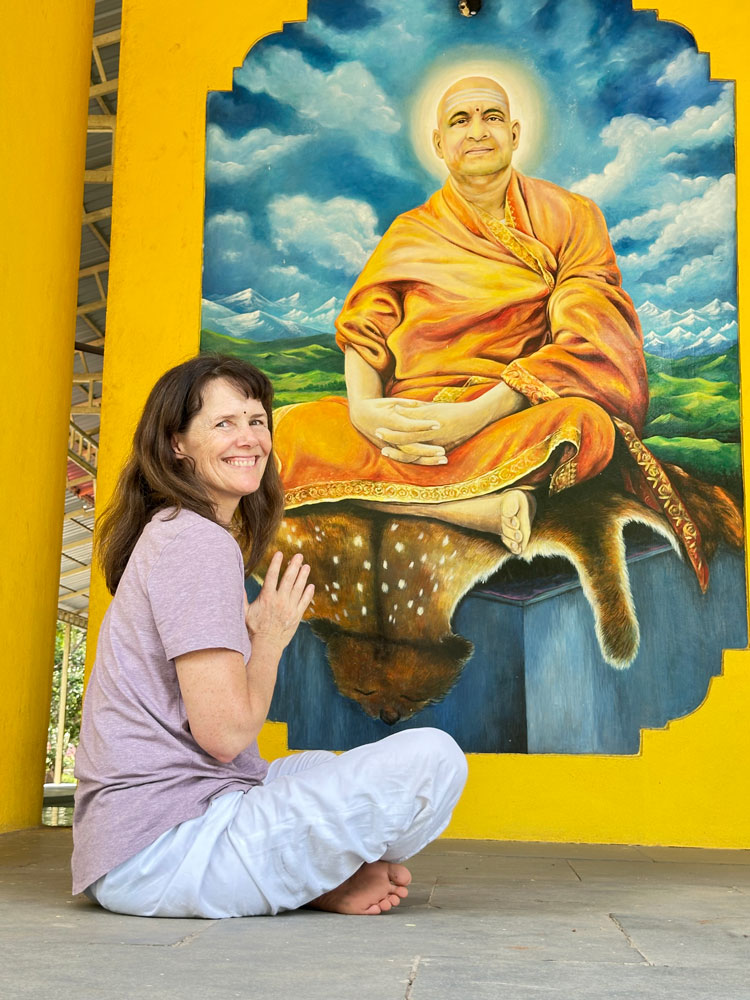
This is my third time at this centre previously visiting in 2007 and 2024. The Sivananda ashram and tradition occupies a special place in my heart as their centre in the northern Himalayas is where I did my first teacher training in 2002.
Swami Sivananda, who started these ashrams in the 1920’s, was a doctor from a rich family who wanted to spread medicine and spiritual practises to the poor people and so left his family and medical practice and wandered about India for the rest of his life dispensing physical medicine and spiritual teachings. He is someone very dear to my heart as he was the person who first captured my imagination with all that yoga could offer. He’s a huge man the size of a bear, so so unusual as the Indian people are generally so petite and small frame.
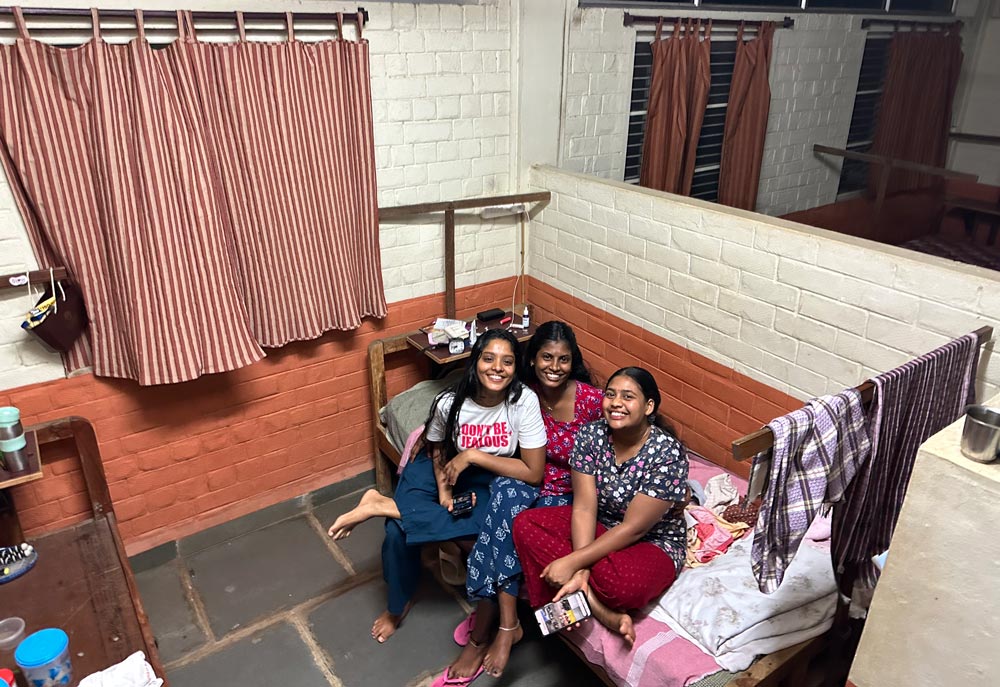
I am spending about ten days here at the ashram staying in the ladies dorm. I’m doing what they advertise as ‘yoga vacation’. There is a fairly strict schedule that begins at 6 am and finishes at 9:15 pm. Quite a few breaks in the day but also quite a lot of program to attend. Having stayed at these ashrams many times I’m quite familiar with the schedule and love its rhythms.
One of the reasons I keep coming back to the Sivananda ashrams is because they offer what I consider it to be an authentic, traditional yoga. The emphasis is not on how good you look in your Lululemon pants but rather a yoga offering that is taken from the ancient vedantic period and aims to fully develop the person to lead a fruitful and fulfilling life. A few of Swami’s quotes are “Serve, love, give, purify, meditate realise, or “Health is wealth, peace of mind is happiness, yoga shows the way”.
Swami was a karma yogi. If you do asana and meditate then you are a raja yogi – this is the yoga of the mind. Karma yoga is the yoga of selfless service – action! Not alone on your mat doing your practice but rather out in the community serving others. A path of realisation through conduct and selfless service. You do what needs to be done but not for the benefit of accolades or wealth, but genuinely for the good of others.
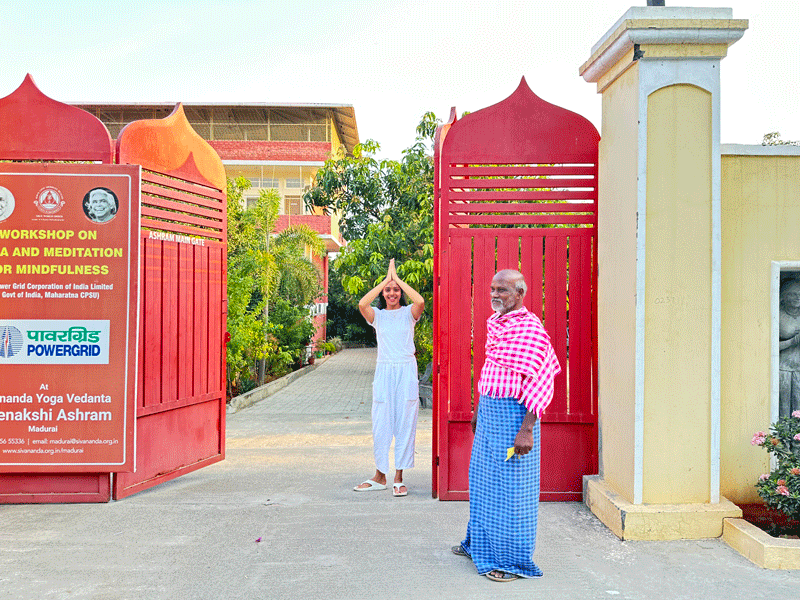
Every day at 11am we do karma yoga for a half hour or something like that. Sweeping and mopping the dining floor or helping in the kitchen have been mostly what I’ve been doing. It’s a nice time of the day to be with others especially the staff that you might otherwise not get to talk to.
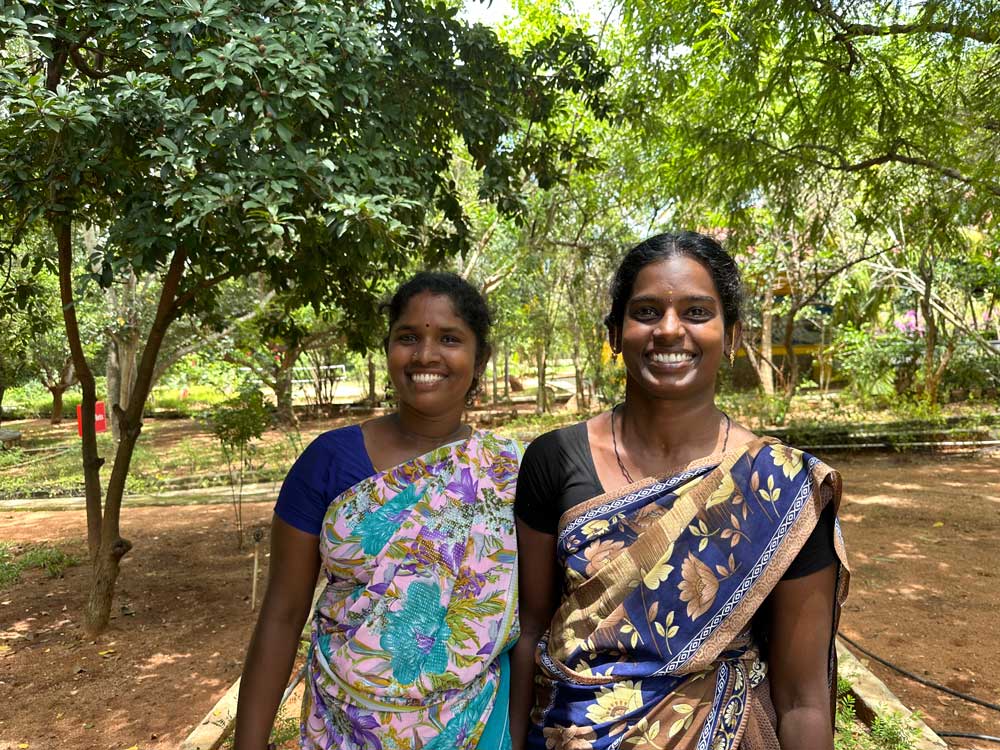
The Indian people must be the most heart-felt and gentle people on this earth. Their smiles and their generosity is astounding and always leaves me thinking us foreigners have a lot to learn in that regard. The staff they have here in the ashram are mostly from villagers from the surrounding rural area I’m guessing. On the ashram campus they also have a reasonably sized hospital where local villagers can come and get free medical care, both allopathic (western medicine) and ayurvedic, which is the very developed traditional medical system of India.
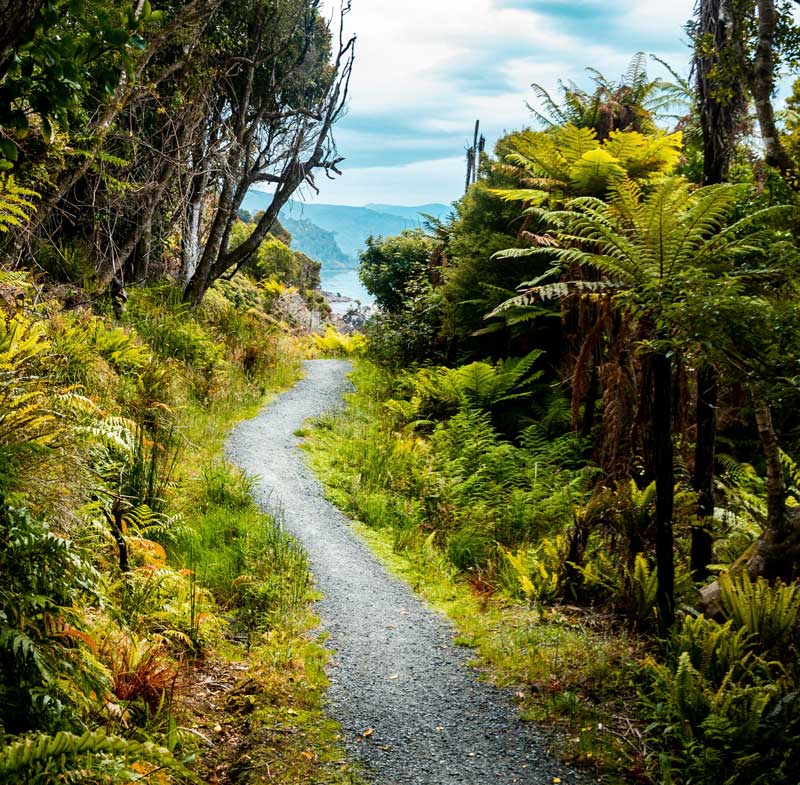
The ashram is on about 12 acres of land. From what I can gather it is very fertile earth, its beautiful deep red reminds me of the Aussie Earth. Lots and lots of really big trees including mango trees and cashew nut trees, bamboos, frangipanis and lots of red and white flowers. In this massive land area there are a few buildings, mainly accommodations for guests, the dining hall/kitchen and 2 sizeable yoga halls dotted throughout the jungle-like bush connected by stone pathways.
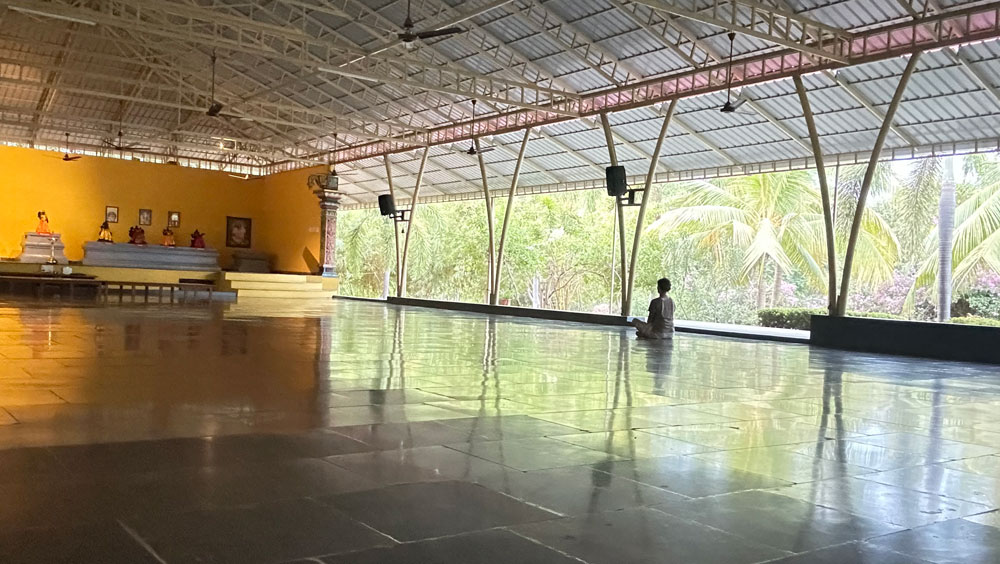
With 37°, I’m very grateful for the big shady trees everywhere although even still it’s too hot to be outside for too long in the middle of the day. Unfortunately an ashram is not like a wellness retreat centre, and there are no refreshing swimming areas or comfy deckchairs lying around to lounge in! And of course with being in a rural area there are other animals sharing the space with us. Number one – monkeys!!
For people that have never been someone like this with monkeys, I’m not sure if people think – oh that would be so cute to have monkeys around…. But, uhum…., no. The monkeys, oh my god the monkeys create so much to be navigated. When I first came here in 2002 the ashram was only a couple of years old and it was really basic, something that you might see on a Pacific Island – just really simple buildings with palm frond ceilings and only half walls to let the breeze through; the dining hall was simply some stone slabs with a palm frond roof, all open air – lovely. With humans cooking up big feeds, sitting down to eat big feeds – yes, great!, free food for the monkeys. And these monkeys are not the size of a cat, they range from small to the size of three-year-old human, and of course they come in packs.
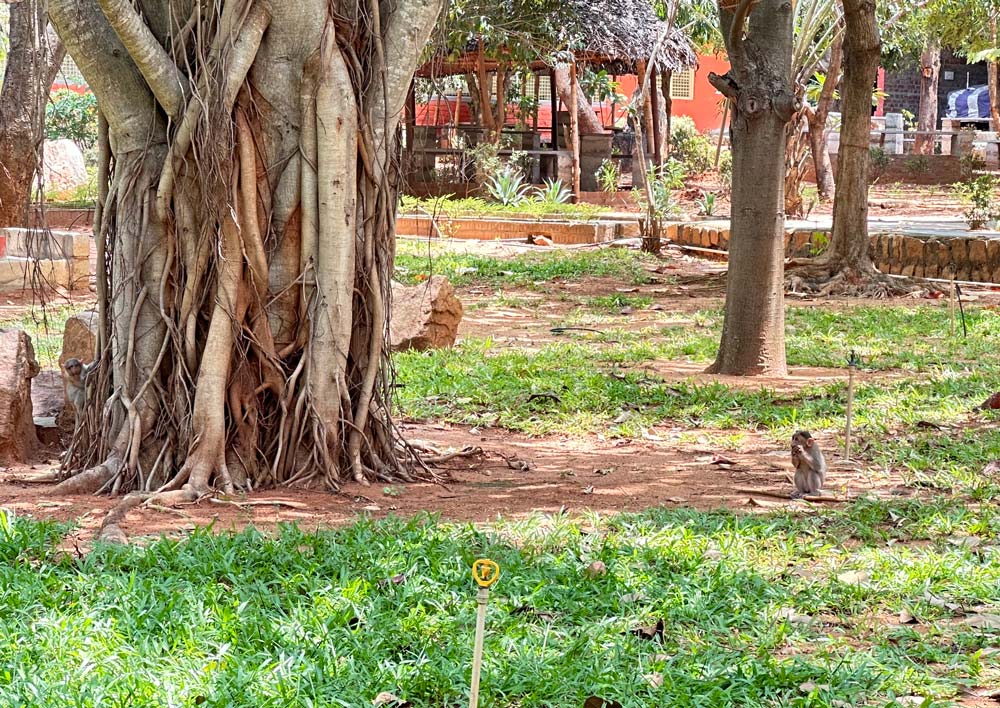
On my past two trips in the ashram you’d be eating your meals and there would be a staff member with a big stick who would be scaring them away and trying to shoo them off the rafters before they dropped onto your plate. I used to think it was great sport, especially when you would see that the monkeys had been surreptitiously surveying the scene, waiting for the best opportunity, and then scarpering away with a handful before they guy with the stick got them.
So the staff must have had enough of that game over a few decades. I was a bit dismayed this trip to see on my arrival that the dining hall has now been rebuilt as a massive cage. Yes, that’s right, the humans now sit inside the massive cage to eat their meals, and the monkeys swing on the bars on the outside checking us out. The irony is hilarious and even though it enables everyone to eat the meals in peace, I definitely prefer the more native option.
If you want to take food to your dorm and have to carry something through the ashram grounds then you are fair game. On my last trip I learned my lesson when a monkey pounced on the bag of fruits that I was carrying scaring the living daylights out of me. They are not too vicious, but sure a little bit vicious.
This trip, like I do on every trip to India, I find a little friend, in this case a little pussycat that looks pretty skinny and has no family. Every meal I save a little bit, such as curd rice, or coconut chutney to feed to him. This is a risky proposition as it means I need to carry a little bowl of food out of the cage and walk around the grounds with the bowl stuffed up my shirt looking for the puss cat without attracting the attention of the monkeys in the trees. An exciting little mission.
The schedule each day is the same starting at 6am with 30minutes meditation then 1 hr chanting with drums and instruments. Then chai followed by a 2hr yoga session of pranayama and asana. 10am is brunch time the main meal of the day, buffet style vegetarian delights eaten with your hands seated on the ground. That is followed by karma yoga, a lecture on yoga philosophy, a few hours break then 2hrs more yoga mid afternoon, evening meal at 6pm and then again meditation and chanting 8-9pm. A full day but they roll so nicely.
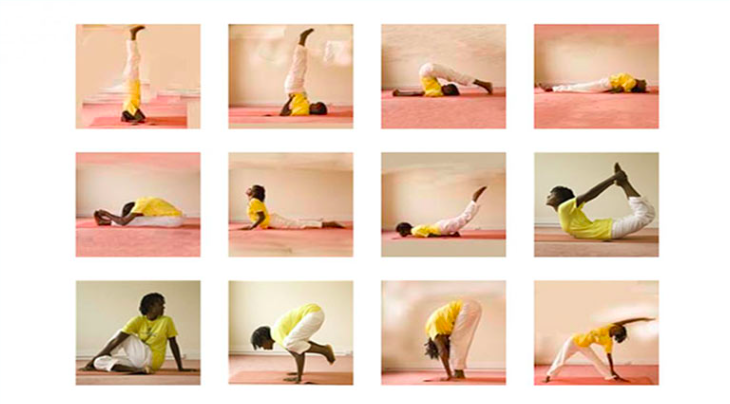
The yoga at Sivananda is a set sequence, same every time with some teachers offering a few variations but generally not so much. The asana begins with sun salutations and then 12 postures, all of which are held, no vinyasa like in the Krishnamacharya lineages. The first pose is headstand and there a few inversions. It’s a super lovely sequence which I’ll put at the bottom of this blog for those interested.
I love all the asana. In the last few years my main practice has been just meditation so it’s so lovely to come back to these poses that I knew so well.
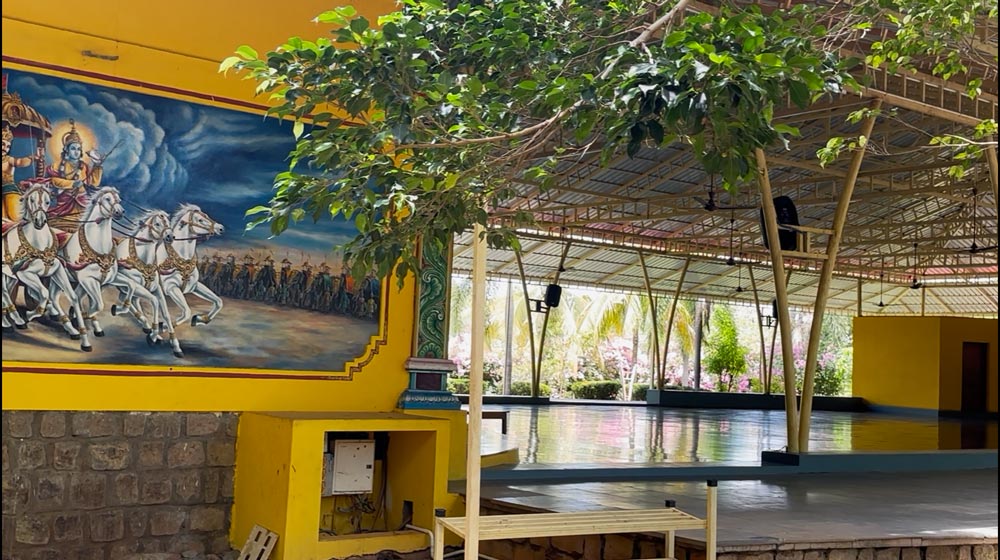
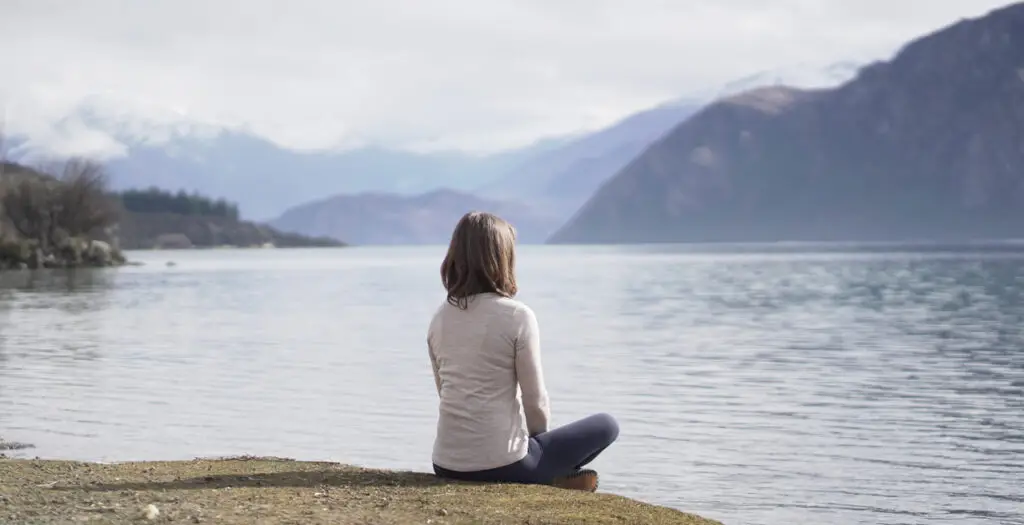
My favourite time of the day is sitting for meditation at 8 pm. The heat of the day is over and there’s a lovely cooler 28° (I must be acclimatising saying 28°is cool). The satsang hall where we sit is the size of a super large gymnasium, beautiful black tiled floors, posts and a very high roof, no walls. The bush and trees are very close to you and the sounds of the dusk are near – the crickets and frogs, the warm cool breeze blowing through and the silence of the ashram settling around you. It really is such a deep feeling of peacefulness and gratitude for being here.
And such a funny scene – 20 of us seated in this big open air yoga hall earnestly chanting with drums and other instruments; instead of immersion in the music, we all are looking sideways at the band of 15 or so noisy monkeys creating a ruckus as they jump through the trees. The monkeys in the trees are all earnestly looking in at us – the weird scene of the humans sitting together with all their trinkets making all these strange sounds. And you have to laugh at the scene of the monkey on the edge of the yoga hall picking his ass with a half boredom while he watches 8 humans systematically and synchronistically move through the sun salutation sequence.
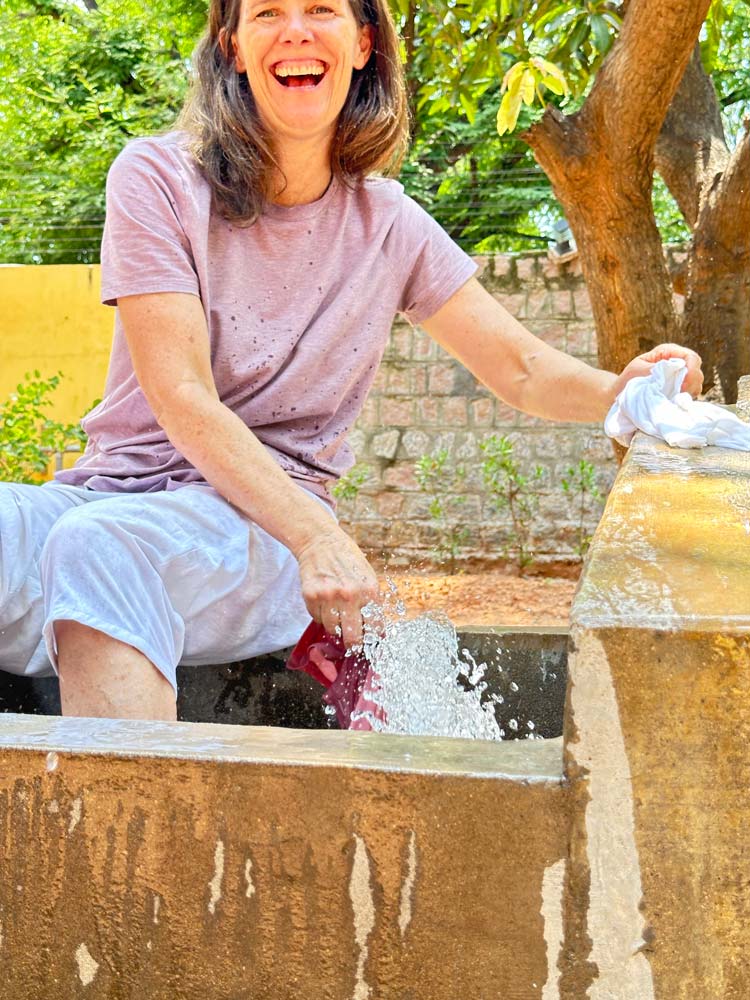
Since my first trip backpacking in India at 22 years old I have always felt a deep resonance with the energy of the land here. There is a reason, however we may try to quantify that, why several of the world’s most prevalent religions were started in India.
There is something deep and potent in the feeling of the land here. In the quiet of those evening meditations I feel so open to that, so touched by that. So so happy to be here.
There are about 6 teachers who instruct the classes. Most of them are young Indians around 25-30years old who have done the yoga teacher training courses they run here and who have decided to stay on in the ashram as staff. It is super interesting to talk to them and hear their stories. One young girl Jyoti was raised in an orphanage and a friend recommended to get connected to an ashram as a path for education and a possible career. Another guy Rahul seems to be from a comfy middle class family and has quickly moved into a more management roll at the ashram, he plans to start his own yoga school in Kerala, a popular tourist destination. The one westerner teacher, 50yr old Viktor from Ireland, has been here 12 months after a marriage split and wanting a change of direction in his life.
The guests are 80% foreigners and the rest of course Indians. The Indian guests are an interesting mix. One man, 54yr old Balaji, is here with his wife for 4 months now that the kids have left home. He has had a very successful IT career and now is very actively seeking a spiritual path and answer to this life. Him and I have had many deep conversations about the vedantic and Buddhist path and all the different inquiries possible. I’ve really enjoyed talking to him. Vimal, a 25 yr old just qualified doctor had perhaps the most radiant face I have ever seen. He had a deep peace about him. He said that myself and the Russian girl were the first foreigners he had ever met and he thought it was so curious how we as westerners were so interested in the Indian traditions. And then there’s Annie, a German girl my age who has been doing the backpacking thing, surf camp in Bali, ashram life and then heading down to Sri Lanka.
For myself I’m coming to the end of my ten days here. I’ll catch a 6 hour train east to Chennai and then catch a flight up to Kathmandu Nepal where I plan to trekking. The ashram and my time here has been SOOO peaceful. My meditations have been deep and wide and my body feels strong and poised from all the asana. I feel very sad to be leaving and already wondering when I’ll next be back. I was enquiring to the management about bringing a group of kiwis here on retreat so maybe that will be next!
I would highly recommend anyone to come stay and have this experience. Or actually, no that is not correct, I would not recommend it to everyone. It is India. India is such a rich and crazy place, only suitable for those with an appropriate sense of adventure and ability to cope with the unexpected. The rewards are tremendous. The kindest people you will ever meet, a deeply spiritual land that reveals itself in so many ways, and a place of so much unexpected humour and dancing.
India, come and see.
Sivananda Pranayama & Asana Sequence
Always the same sequence, typically takes 1.5 – 2 hours
Pranayama
• Kapalabhati — Skull-Shining Breath
• Anuloma Viloma — Alternate Nostril Breathing
Warm-up
• Surya Namaskar — Sun Salutations
• Pada Sanchalanasana / Leg Raises — Leg Raises
The 12 Basic Asanas
1. Śīrṣāsana — Headstand
2. Sarvāṅgāsana — Shoulderstand
3. Halāsana — Plough
4. Matsyāsana — Fish
5. Paścimottānāsana — Sitting Forward Bend
6. Bhujangāsana — Cobra
7. Śalabhāsana — Locust
8. Dhanurāsana — Bow
9. Ardha Matsyendrāsana — Half Spinal Twist
10. Kakāsana — Crow
11. Pāda Hastāsana — Standing Forward Bend
12. Trikoṇāsana — Triangle
Final relaxation
• Śavāsana — Corpse Pose