The spirit of Nalanda continues…..
A 10 day silent meditation retreat at Deerpark Institute, Himalayas, India
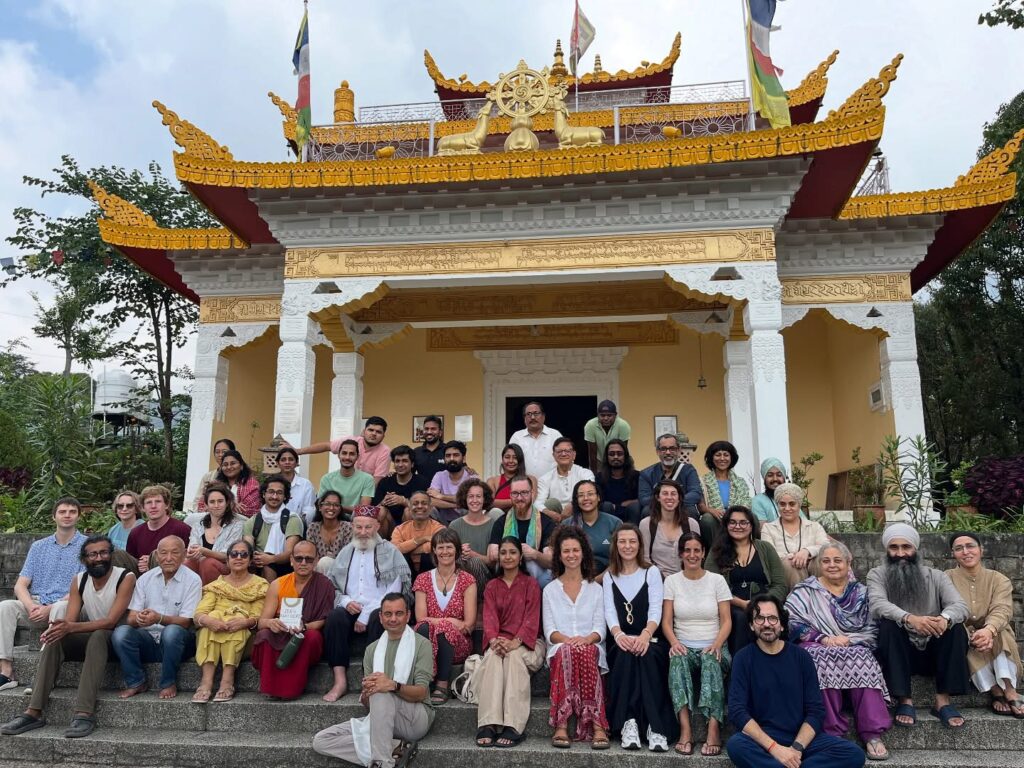
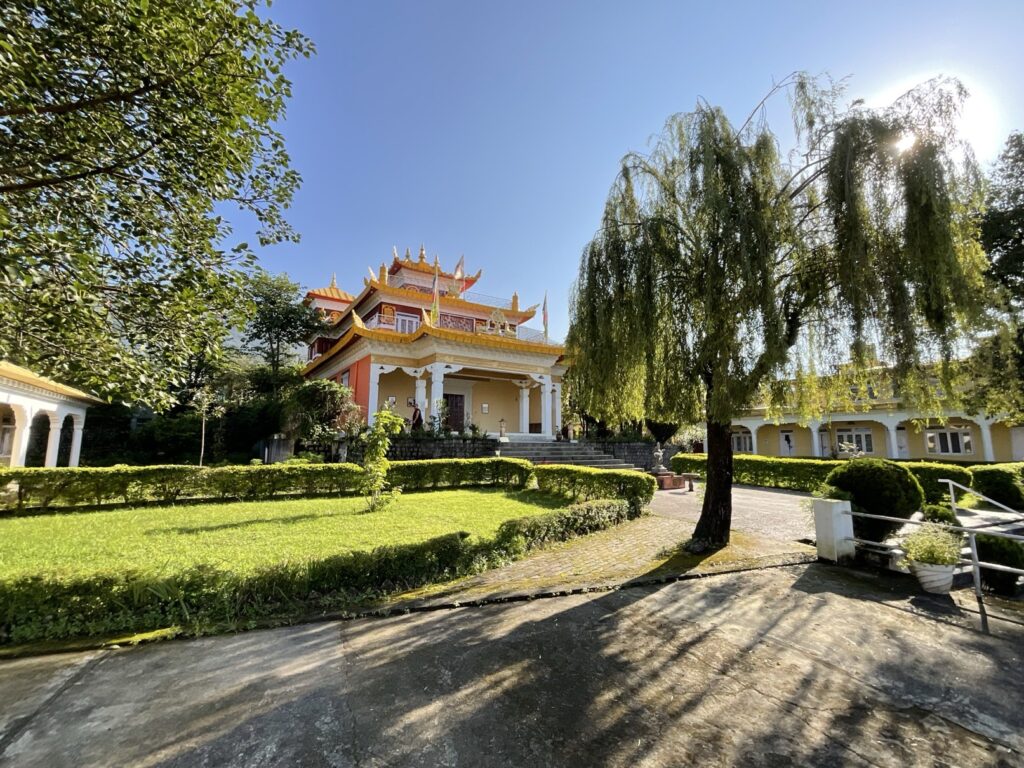
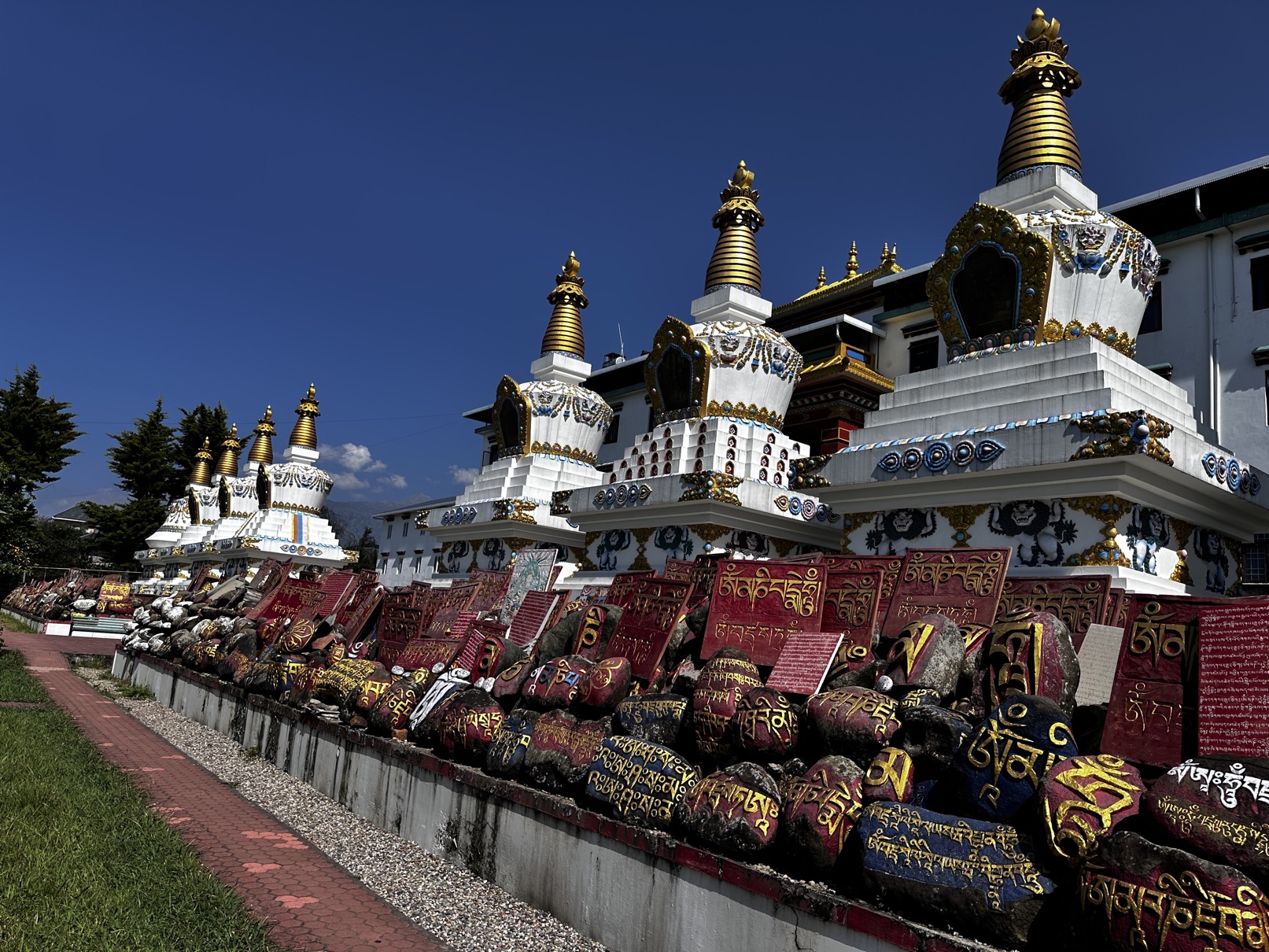
The Ashram is in a small town called Bir Colony, a Tibetan settlement and Indian town in the north
of India. There is quite a large complex in the quadrangle format with a very large Tibetan style
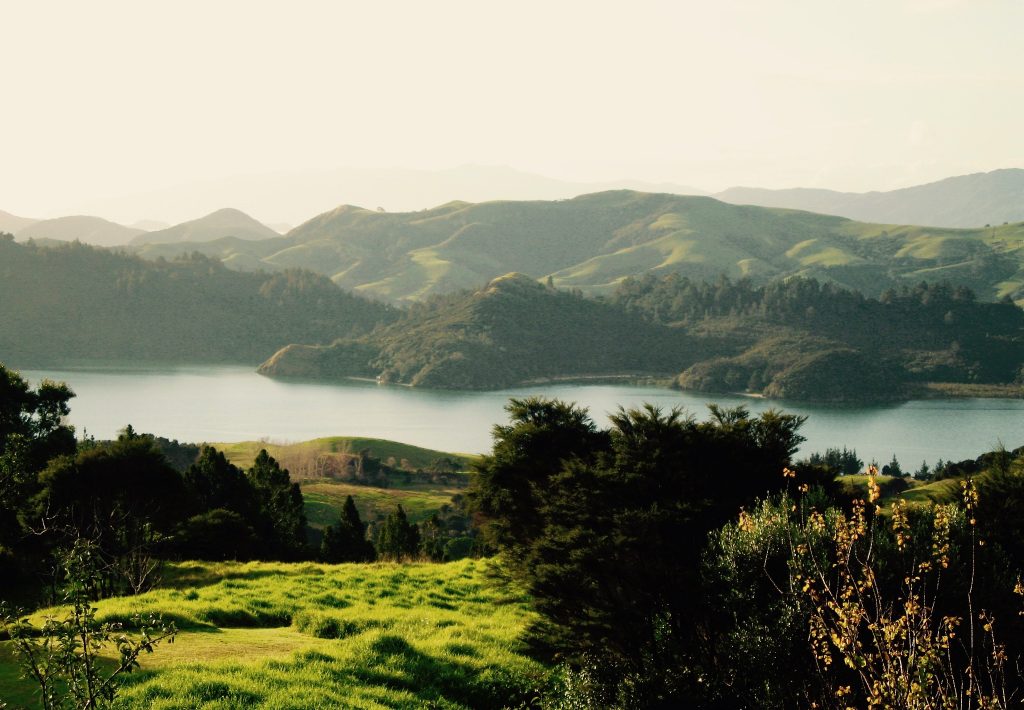
monastery/temple overlooking the centre, with fine, steep forested foothills of the Himalayas
overlooking us all.
I’m here for a 10 day silent meditation retreat with a Buddhist Teacher from Czech Republic. The only thing I
know about him is he is 76 years old and he is two years out of being a monk for 40 years,
disrobed they call it. He was described as a rare gem in the Buddhist world on the website.
Always an interesting risk coming to such an immersive retreat with the teacher you don’t know
but I’m up for the adventure. A silent retreat means Noble Silence – no talking, no communicating with others with the exception of asking the teacher questions during the Dharma talks.
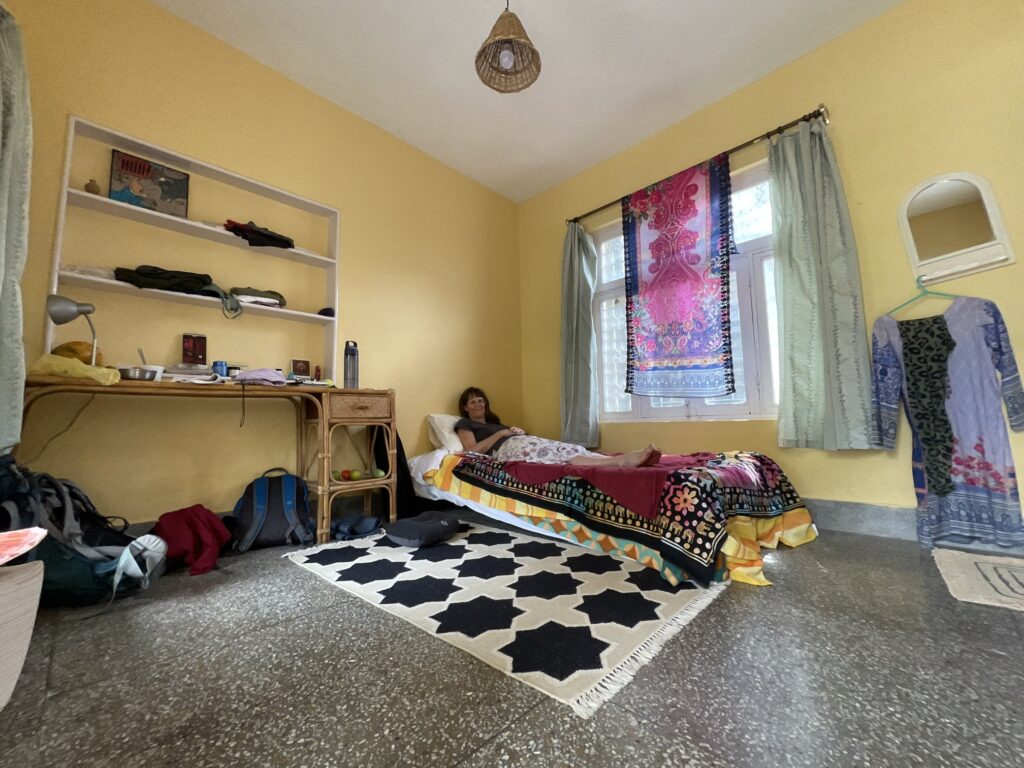
I’ve booked a single room with attached bathroom which in an ashram is a real luxury (mostly dorms)
and when I’m shown to my room I’m happy to find a very cute small room in a quiet corner of
the complex, albeit a little mouldy. Himachal Pradesh, which is the Indian state that we are in, has
had the most intense monsoon in living memory according to the locals. A lot of the state has had
major roads completely wiped out, landslides, deaths, lots of chaos. The place I stayed in
Dharamsala the night before the retreat started (and now I see the ashram also) has only just
merely coped with the rains. Being a tourist in India, there is always the unexpected that you have
to cope with, and it seems on this trip what I am going to attempt to cope with is rooms covered
in mould. Hmmm…
Yep
Leads me to the most philosophical India quip of all time (…..has to be said in an Indian accent)
“what to do?’
The staff at the ashram are super lovely, always the staff in India almost everywhere are 100%
male as all the women are at home. The men are always super sweet but it’s always a shame not
to meet the ladies who are always even sweeter, and so beautiful!
The first evening of the retreat is the only opportunity to talk and chat to the other retreat
participants. They are 42 in all, about 60% Indian and the rest foreigners. I chat to Nir from Israel,
Amritti a young female lawyer from India, and an American couple doing some extended
travelling. Everyone else for the next 10 days I will only know from the stories I make up about
them in my head. Nir is an older guy and has done a lot of meditation it seems, Amritti has done
zero and this year hopes to find some release from her very stressful job and the stress of living
in a big Indian city.
The rigid schedule starts tomorrow morning and although I did look at the daily schedule months
ago when I booked the retreat, I’m now a little “Oh really!*^#!”when I read it properly. Wake up
5:30 am and then the whole day is meditation, discussion, dharma talks with only a two hour
break for lunch and then finish 9pm. Jeeez. It’s a funny headwreck coming to these things – the
prospect is all exciting at first thinking of the depth of practice on offer and the exotic ashram life,
but then every time at the beginning when you’re waking up to a clanging bell at 5:30am I always
have the thought “ God wasn’t this meant to be a holiday Susan.”
But here I am.
This is exactly where I want to be.
A real highlight for me being here, besides of course the depth of practice, is the season. It’s mid
September, which means it’s the tail end of the monsoon. For someone who loves nature and all
the expressions of nature, the monsoon in India has many times been some of my most exciting
trips. As I mentioned earlier they had a huge monsoon here. It’s usually finished in August but now
it’s mid September and there is just the last of the energy moving through.
Most days the Himalayan mountains that crown the ashram are covered with thick multi – layered, rolling
thunderclouds. There’s high humidity in the air, and the most exciting part, hours and hours and
hours of thunder rumbling through the heavens. One day I kid you not there was one roll of
thunder that went on for 1 hour 45 minutes. As I’ve also experienced before at the beginning of
the monsoon here in Rishikesh, there is hardly any rain, just thunder, thunder and more thunder. I
totally love it curled up in my little cosy room on my first night. Happy to have arrived.
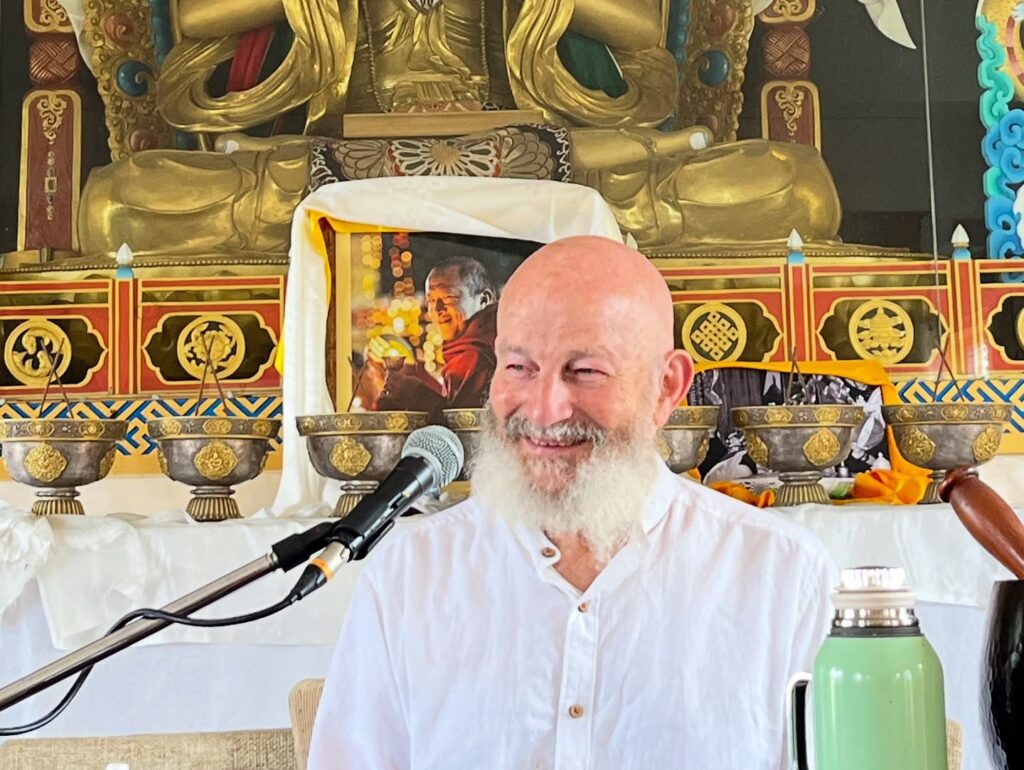
So the retreat begins. The teacher seems okay, he is obviously very knowledgeable, and has as
much as I’ve ever seen before a real twinkle in his eye. My strategy of being super early to the first
session pays off in that I get to choose the best spot in the hall, one where I can be against the
wall if I need to, and there’s a window beside me. I also like to be at the front so I can be that
student who always asks lots of questions.
I would love to say that the first few days are wonderful and I settle in easily but alas, intensive
retreats in my experience don’t tend to be like that. Instead, the first couple of days I have to deal
with intense complaining, intense irritation and mild to intense discomfort. Being a 10-day silent retreat, this is all in the very small and very big confines of my mind.
The code of conduct at the ashram is pretty much – these are the rules, put up with it, get used to it. I tend to be bossy and a bit demanding so swallowing these traits for a 10 day silent retreat can be very uncomfortable. Some of the many complaints rolling around my mind are – i’m sleeping on a mattress that pretty much amounts to a piece of plywood, the food is way too greasy and where are the vegetables, the man seated behind me is snorting
the whole time in meditation, why didn’t they clean the mould out of the bathroom, the teacher is
going off on too many tangents, why does the neighbour leave their porch light on the whole
night…. and on and on and on. What they say is true, that a silent retreat enables you to see all of
the %#(^## mind.
Well, here it is.
After a few days, I’ve calmed down and managed to make a few gains in getting what I want. (eg.
illegally sneaking out of the ashram to buy some cleaning product for my mould ridden bathroom;
unbelievably nowhere sold bleach so I cleaned all the windows, joinery, walls and cistern with a
gooey, tacky, electric blue toilet cleaner. After covering the whole bathroom with it I was a bit
dismayed that it was not that easy to get off – some sight!).
A big surprise was that there are no guided meditations, students are pretty much left to
themselves. In the Dharma talks there is discussion around the theory of meditation, we are then
left to select what aspects are appropriate to plug into ourpractice. I have never been to a
meditation retreat like this and feel a little sorry for the many beginners in the group. After
digesting this approach, I knuckle down with all the many many volumes of techniques and
strategies I know I know and get stuck in.
The main gist of the retreat is shamatha – which means bringing the mind to a state of balance
and one-pointed attention through concentration on the breath. Buddhism is the understanding
that all suffering, all discomfort that we experience comes from reactivity. The mind is constantly
involved in complaining about what it doesn’t like, and becoming attached in craving to what is
impermanent. When the mind is settled in concentration we can see this habit of push and pull, in
the gaining of that awareness, understanding and wisdom arises that all suffering is caused by
this reactive habit of mind. We consequently come to deeply understand that happiness is in our
own hands, not a result of external circumstance.
I have lots of experience doing this practice and contrary to my first disappointment at there being
no guided instructions I very soon end up loving the self guided silence. So keenly I feel the
preciousness of this opportunity to practice for hours and hours a day. It is so true what is said –
that the more closely you settle the mind on the breath, the more interesting, fascinating and
compelling the practice becomes. It is the complete opposite of what a beginner might think that
persistently focusing on the one thing eventually becomes boring.
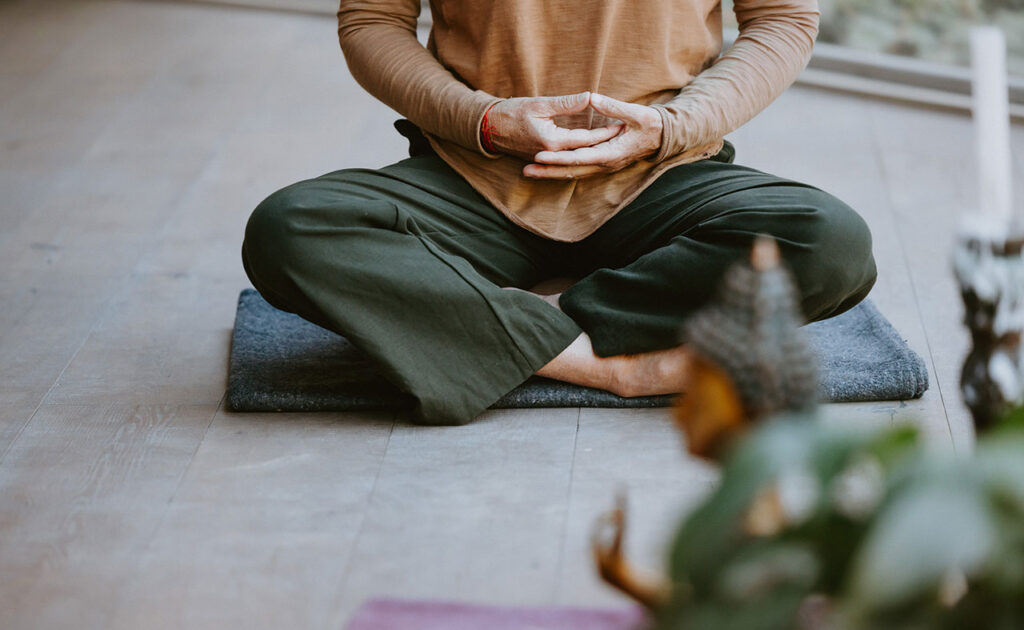
Most of the hours are spent – 40 minutes seated meditation followed by 20 minutes walking
meditation – rinse and repeat. The sitting meditation allows you to go deep into a (potential) calm
abiding of the mind, and then the walking meditation is the practice of bringing this off the
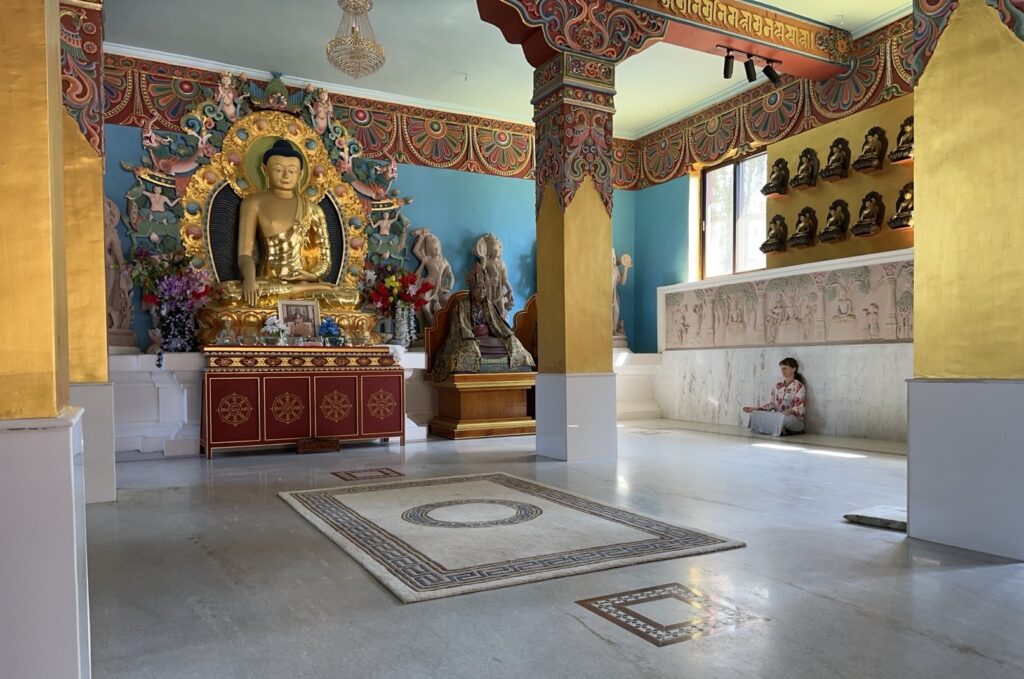
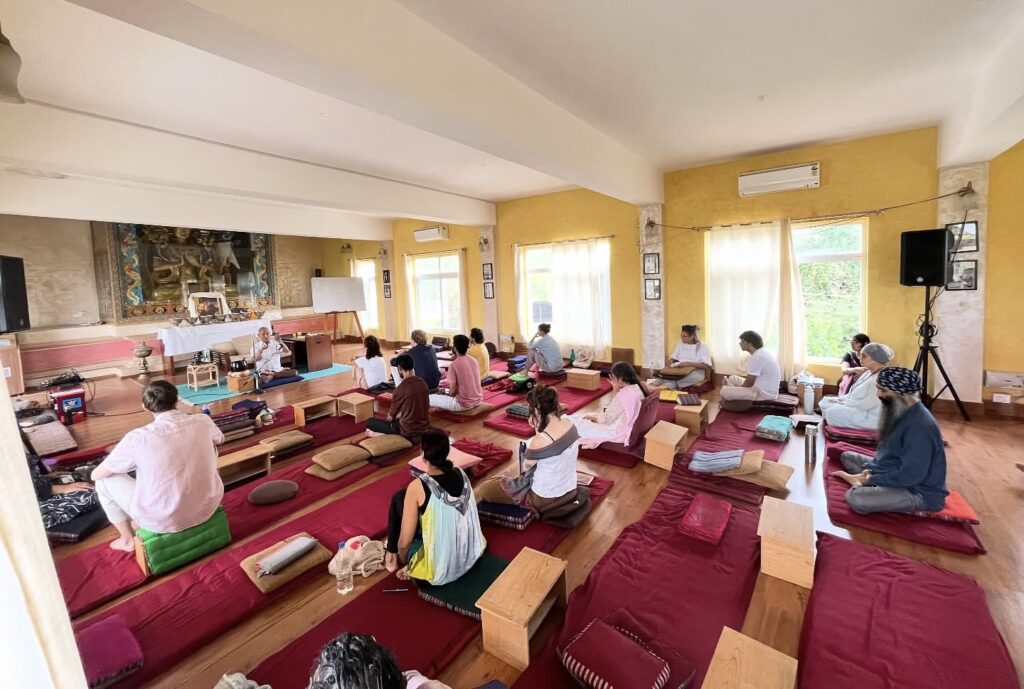
cushion, not to mention saving my knees. The seated meditations are done in a beautiful high
ceilinged, airy, open and bright Manjushri Hall. Most people are seated on cushions on the ground,
and a few older people (and a couple of very stiff westerners) are seated on chairs up the back.
For the walking meditation people roam all over the ashram campus which is significantly large
and has lots of trees, flowers, lawns and monsoon blooming greenery. While I definitely prefer the
introspection and detailed focus in the seated practice, the walking meditation is a lovely break to
get my feet into the ground and to open indulge in this amazing environment.
Vegetarian meals are cooked for us three times a day as well as a couple of chai breaks. The food
is pretty good overall, lots of tasty curries, loads of rice, chapatis and spicy pickles. What’s
lacking is fresh salads and you see many westerners, like myself, coming armed to the meals with
large cucumbers and tomatoes they’ve got stashed in their room. In typical Indian fashion, one
day salad was on the menu but it consisted simply and plainly of sliced onions.
The tail end of the monsoon continues to roll through and around day five and six we start to get a
little bit of sunshine. It’s nice to hang my damp wardrobe out on the line and air my room out.
Even though there’s no talking between the participants it’s funny how you seem to get to know
each other. Not knowing anyone’s names I have christened some of them appropriately. Named
for their uncanny resemblance there is – Liam Gallagher, Osho, Indian Mr. Bean, snorty Staples
( the snorting guy who is so similar looking to my Auckland friend Mr. Staples) and then Miss
bossy boots, Mr hotspunk and the hilarious robotman.
This Indian state of Himachal Pradesh is where the Tibetans in exile live, including the Dalai Lama.
Having been here for many decades they are reasonably integrated. They are however such
completely different people to the Indians. There are two Tibetan monks on our retreat, one is an
assistant teacher and one is a student. The country of Tibet kept itself voluntarily completely
isolated from the rest of the world for hundreds of years, from their home on the Tibetan
Himalayan plains they cultivated a deep understanding of consciousness and hence the nature of
reality. They completely discouraged contact with the outside world. Similarly, the Tibetan people I
have come across in India are also very separate. They don’t mix with others and have a very self-contained
and private manner.
Only once in the whole 10 days did I see a break from this demeanour. It was a funny moment –
the 76-year-old teacher (remember he was for 40 years a monk himself) was telling how when he
was 25yrs he escaped socialist Czech and came to India as a hippie. When he arrived at Delhi
airport he couldn’t believe the freedom that there were holy men/bums smoking charis (hash) in
the street and went immediately up to join them proclaiming this place is paradise!. The Tibetan
student thought this was completely shocking and hilarious and almost wet himself laughing.
So the days truck on, some going slowly and then days 6, 7, 8 speeding up. I have some
incredibly beautiful deep moments of meditation where the mind sits so closely and deeply with
the breath and a vast and spacious arena of stillness opens up. Having these experiences and
deeply knowing that I can rely on them is so precious. 10 days of practice allows you to really
build the cumulative effect of the practice. Each time I sit for a session there is an
overwhelming atmosphere of “I love this, I am so goddamn lucky to be here.”
As the retreat nears its end I reflect on my gains. Being away from social life, emails and
responsibilities, I’ve been able to take the next step in developing my practice. As the years go by
in my life, I’m often acutely aware of the limited opportunity to learn and to grow. It’s always been
a huge curiosity to me to understand what consciousness is, how my mind creates my
experience, and what an incredible mystery life is. Nearing the end of this retreat I feel more
deeply immersed in this exploration and mystery. It is without doubt an incredible path.