Can a Meditation App Really Teach You to Meditate?
Yes – and no.
A meditation app can be a very good place to start. You can explore different teachers and methods, try a short meditation without making a big commitment, and build a regular habit in the middle of a busy life.
But learning meditation is about more than following instructions.
At some point, questions arise that an app can’t really answer. Am I doing this correctly? Why is my mind so busy? What should I do when I become restless or sleepy? What happens when I start to experience something I don’t understand? How do I take my practice further?
That’s where learning from an experienced teacher becomes different.
The question isn’t whether meditation apps are good or bad. They can be extremely useful.
The question is what can an app teach you – and what becomes possible when you learn directly from another human being?
What meditation apps do well
There are some very good reasons meditation apps have become so popular.
You can try different teachers and methods
When you’re new to meditation, you may not know what kind of meditation is right for you.
An app allows you to experiment.
You can try mindfulness, breath meditation, body scans, loving-kindness practices and many different approaches. You can listen to different teachers and discover what resonates with you.
That’s valuable.
You don’t have to commit to a particular teacher or meditation tradition before you’ve had the opportunity to explore.
There is very little commitment
Downloading an app is easy.
You can try ten minutes today and decide tomorrow whether you want to continue.
For someone who is curious about meditation but isn’t ready to commit to a course or retreat, this can be an excellent way to begin.
And there is no need to make meditation complicated. Sometimes simply starting is the most important thing.
You can meditate whenever you want
An app fits easily into modern life.
You can meditate when you wake up, before bed, during your lunch break or while travelling.
Many apps also offer daily reminders, encouragement and milestones, which can be useful when you’re trying to establish a regular practice.
For developing the habit of sitting down and practising every day, an app can be genuinely helpful.
Apps make meditation accessible
You don’t have to live near a meditation teacher.
You don’t have to travel.
You don’t have to take time off work.
You can begin immediately, wherever you are.
For many people, that accessibility is what makes meditation possible in the first place.
So yes: a meditation app can teach you some of the fundamentals of meditation.
But that isn’t necessarily the same as learning meditation deeply.
The limitation of following one-fits-all instructions
Imagine learning to play a musical instrument entirely from an app.
You could learn the notes. You could follow exercises. You could practise scales. You could even become quite good. But eventually you might want someone who can listen to you play and say:
“That’s where you’re going wrong.”
Or:
“Try it this way instead.”
Meditation is similar.
An app can tell you what to do. But it can’t really see what you are doing.
Meditation is an experiential practice. You’re learning about your own mind through observation and inquiry And your experience is not necessarily the same as the person sitting next to you.
One person may be restless. Another may be sleepy. Someone else may become absorbed in thought. Another may become very calm but not know what to do next.
There isn’t always one generic instruction that applies to everyone.
The value of being able to ask a question
This is one of the biggest differences between an app and an actual teacher.
When you learn with a teacher, you can say:
“This is what’s happening in my meditation. What should I do?”
And the teacher can respond to your experience. You can ask follow-up questions. You can explain what you’re experiencing. The teacher can recognise a misunderstanding that you might not even know you have. They can help you distinguish between a genuine development in your practice and something that is simply an obstacle.
This personal relationship and feedback can save you a lot of time. Sometimes a five-minute conversation with an experienced teacher can resolve a question you’ve been struggling with for months, or for some people – years.
Meditation isn’t just about learning a technique
This is where meditation becomes much more interesting.
It’s easy to think of meditation as a technique:
Sit down. Close your eyes. Follow your breath. Return when your mind wanders.
And that’s certainly part of it. But meditation is ultimately an exploration of the mind. Everything you experience in life is experienced through the mind.
Your relationships.
Your work.
Your pleasures.
Your disappointments.
Your memories.
Your hopes.
Your fears.
Your experience of nature.
Your experience of yourself.
So why wouldn’t you be interested in understanding how the mind works? And why wouldn’t you want to discover whether the mind can be trained to experience life with greater clarity, ease, freedom and fulfilment? That is a much bigger project than learning how to relax for ten minutes.
What happens when you learn with a real teacher?
A good meditation teacher doesn’t simply give you another recording.
They help you understand your experience.
They can introduce practices appropriate to where you are.
They can answer questions.
They can correct misunderstandings.
They can encourage you when you are stuck.
And they can help you recognise when you’re ready to take the next step.
There is also something important about learning from another human being.
A real person.
Someone whose voice you recognise.
Someone who understands the culture and context you live in.
For New Zealanders, there can be something particularly grounding about learning from a teacher who is themselves a Kiwi, speaking in a familiar accent and cultural context, rather than encountering meditation entirely through a phone.
Susan Allen has been teaching yoga and meditation for more than 25 years and has studied with meditation and yoga masters in India and around the world. Her approach is to make these ancient practices accessible and understandable for contemporary people, without unnecessary mysticism.
The difference between practising at home and going on retreat
There is another important distinction.
An app brings meditation into your existing life. A retreat temporarily takes you out of your existing life. That’s a significant difference.
At home, your meditation practice exists alongside everything else.
Your phone is nearby. The dishes are waiting. Your partner or family are around. Work needs your attention. There are emails to answer. There is always something else you could be doing. You might sit for twenty minutes, but the rest of your life is still running around you.
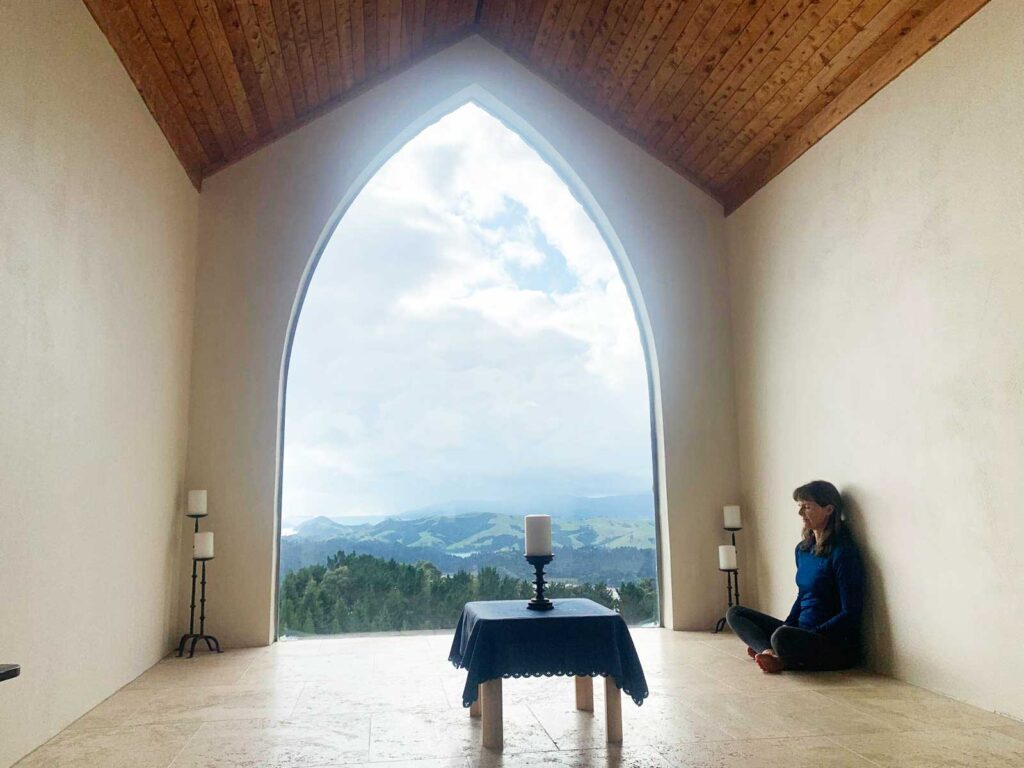
A retreat changes the environment completely. For a period of time, you step away from work, responsibilities, routines and distractions. You have the rare opportunity to immerse yourself in practice.
Immersion can take your practice to another level
There is a reason intensive learning works. When you practise repeatedly over several days, each session builds on the previous one. You have time to notice what is happening, ask questions, experiment and understand. Instead of meditating for ten minutes and then immediately returning to emails, traffic, children, work and social media, you remain immersed in an environment that supports the practice.
This doesn’t mean that a retreat magically makes you an expert meditator. It means you have created the conditions for learning to happen much more quickly. You can often discover in a few days what might take months to understand through occasional practice at home.
Meditation in Nature adds something
There is another reason retreats can be so powerful: where you practise has an influence.
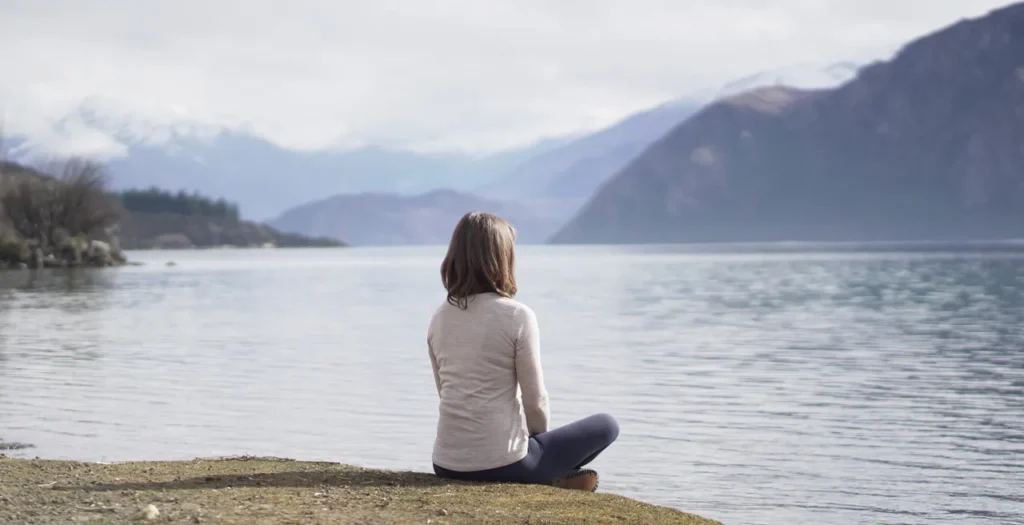
Retreats NZ holds retreats in beautiful natural environments, including places such as Wānaka, Lake Hāwea and the Coromandel. Nature isn’t simply a beautiful backdrop. Getting away from your usual environment helps you step outside your normal patterns.
You wake up somewhere different.
You walk outside.
You see trees, mountains, lakes or ocean instead of screens and buildings.
There is space to breathe.
And when the usual stream of busyness quietens down, a spaciousness of mind and an ease begins to open up.

You discover other people are asking the same questions
There is something powerful about practising alongside other people. At a retreat, you meet people who are interested in many of the same questions:
How does the mind work?
Why do I react the way I do?
Can I become less caught up in my thoughts?
What does it mean to live well?
Is it possible to experience more freedom and ease?
You don’t have to be experienced. You don’t need to consider yourself spiritual. You don’t need to know exactly what you’re looking for. You simply need to be curious.
That shared curiosity creates something an app can’t provide: community. We call that sangha – a community of like minded practitioners.
So, should you use a meditation app?
Absolutely.
If an app gets you meditating, use it. If the flexibility helps you establish a daily practice, that’s valuable. If trying different teachers helps you discover what you’re interested in, explore. You don’t need to choose between an app and a teacher. They can complement each other beautifully.
A meditation app may be ideal if:
- You’re completely new to meditation.
- You want to explore different teachers and methods.
- You want to try meditation without making a big commitment.
- You need maximum flexibility.
- You’re trying to establish a daily habit.
- You want guided practices you can use at home.
- You’re not yet sure whether meditation is for you.
Learning with a teacher becomes particularly valuable if:
- You’re unsure whether you’re practising correctly.
- You have questions about your experience.
- You’re finding meditation difficult or confusing.
- You’ve been practising for a while but feel stuck.
- You want personalised guidance.
- You want to understand meditation more deeply.
- You’re ready to take your practice further.
A retreat can be especially valuable if:
- You want to immerse yourself in meditation.
- You want to make significant progress in a relatively short period.
- You need to step away from work and everyday responsibilities.
- You want freedom from your usual distractions.
- You want to learn directly from an experienced teacher.
- You want to practise in nature.
- You want to meet other people interested in meditation.
- You want to experience what sustained practice is actually like.
What about The Living Path?
A retreat isn’t the only way to learn with a teacher.
The Living Path is an online nine-month guided meditation programme with Susan Allen, designed to help people establish and deepen a meaningful meditation practice.
Rather than simply giving you something to practise on your own, The Living Path provides ongoing teaching, guided practices, community and the opportunity to ask questions and receive guidance as your practice develops.
This is important because meditation isn’t something you master in a weekend.
It’s a path.
You learn something.
You practise it.
You discover something about yourself.
You receive guidance.
You practise again.
Over time, something begins to change.
An app can start the journey. A teacher can help you explore it.
Meditation apps have made meditation more accessible than ever before. That’s a good thing. They can introduce you to meditation, help you establish a habit and give you the freedom to explore different approaches.
But there is a point where meditation stops being simply something you do and becomes something you are genuinely interested in understanding. That’s when a teacher can make an enormous difference. Because meditation isn’t ultimately about following instructions. It’s about discovering how your mind works. And everything that happens to you – everything – is experienced through the mind. Why wouldn’t you be interested in understanding it? Why wouldn’t you want to learn how to cultivate the greatest, richest and most fulfilling experience of being alive that you can? An app can help you begin. But you don’t have to stop there.

Frequently Asked Questions
Are meditation apps effective?
Yes. Meditation apps can be an effective way to begin meditating, explore different methods and establish a regular practice. Their main limitation is that they cannot provide personalised guidance based on your individual experience.
Is it better to learn meditation from a teacher?
If you want to develop a deeper understanding of meditation, learning from an experienced teacher can be extremely valuable. A teacher can answer your questions, identify misunderstandings and adapt their guidance to your particular experience.
Can I learn meditation without a teacher?
Yes. Many people establish a useful meditation practice using books, apps and online resources. However, personal guidance can become increasingly valuable as your practice develops and you encounter questions or obstacles.
Is a meditation retreat better than using an app?
They serve different purposes. An app provides flexibility and convenience, while a retreat offers immersion, personal guidance, community, nature and freedom from your normal routine and distractions. For someone wanting to deepen their practice, a retreat can provide an experience that an app cannot replicate.
Should I try a meditation app before going on retreat?
You can, but you don’t need to. Beginners are very welcome at meditation retreats. If you’ve never meditated before, a retreat can actually be an excellent way to learn the foundations properly from the beginning.
What makes learning meditation in person different?
The biggest difference is the relationship with the teacher. You can ask questions, describe your own experience and receive a response specifically suited to you. You also benefit from the immersion, community and environment of practising with other people.