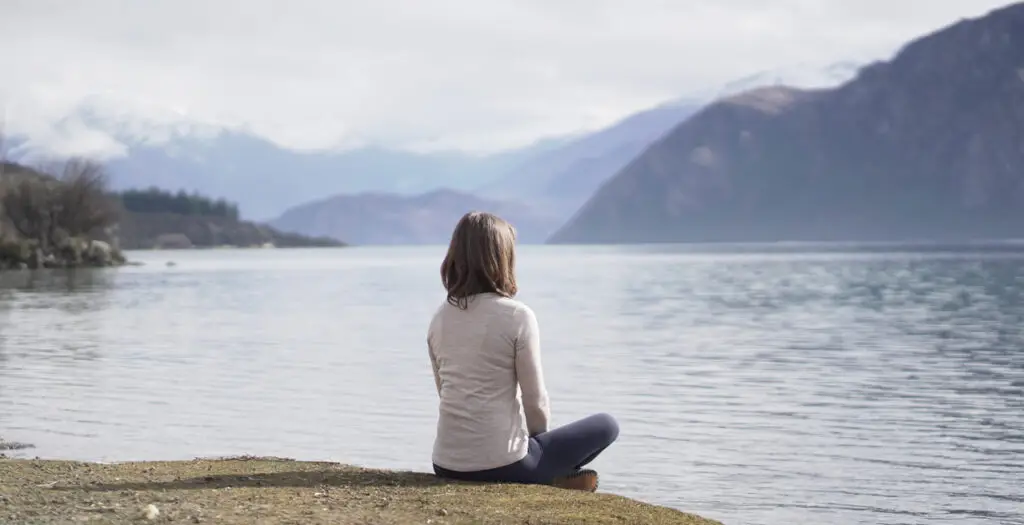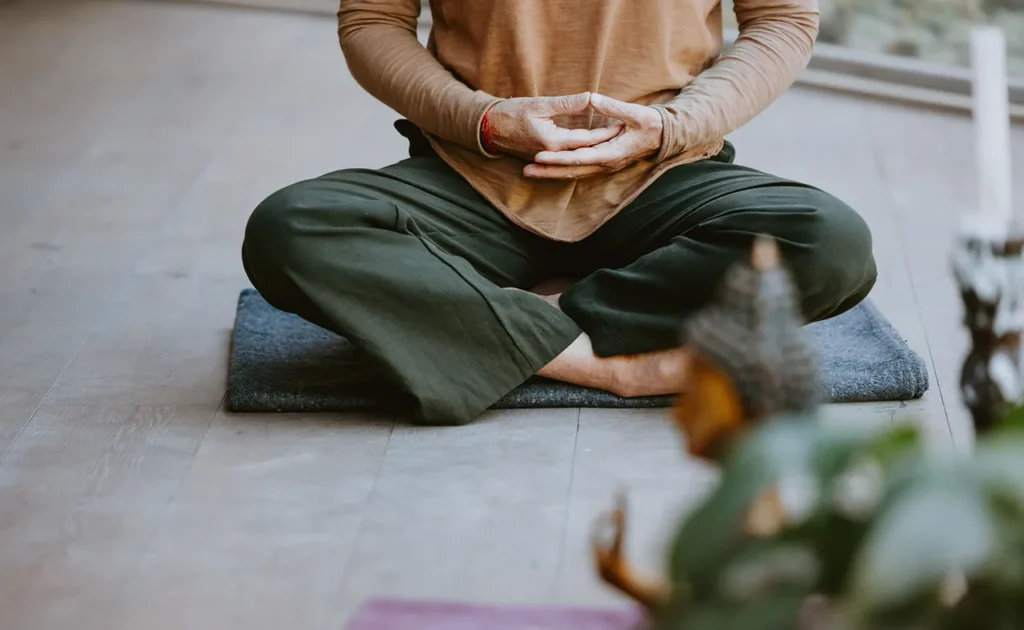
What is Meditation?
In this reflection we will introduce meditation for beginners and discuss in depth “What is Meditation?” and how to get started. You are warmly invited to join us on this the path of meditation – one of life’s greatest adventures!
Every moment of our life, every moment of our experience is perceived through the mind. Meditation is the practice of coming to understand the mind better. It is a practice of developing awareness of how the mind works, so that we can understand our experience better, and so if we choose we can influence positive change in our lives.
Rather than looking for the answer to happiness in the external world, through meditation we realise that true happiness is in our own hands, the answer lies within. This realisation is so immense and so exciting. We no longer have to chase happiness by having the perfect job or the perfect relationship or the perfect life situation, but we come to understand that by influencing the way we perceive the world, the root of happiness lies here.
Meditation is not (necessarily) the practice of quieting the mind, although it may include that. Meditation is the practice of sitting quietly with yourself and coming to understand your experience better – how the mind works, how thoughts get generated, how we get stuck in patterns of reactivity. it is through understanding the mind and seeing its habits that we then have the possibility of operating in the world in a way that there is less suffering, less difficulty, more possibility of thriving and flourishing in the world.
Benefits of Meditation for Beginners
The benefits of meditation for beginners are much the same as meditation for advanced practitioners. It is a continuing process of refinement of many of the same skills.
We can divide the benefits of meditation into two categories:
- Tranquility and peace of mind – these are called shamatha practices
- Cultivating insights that bring freedom – these are called vipassana practices
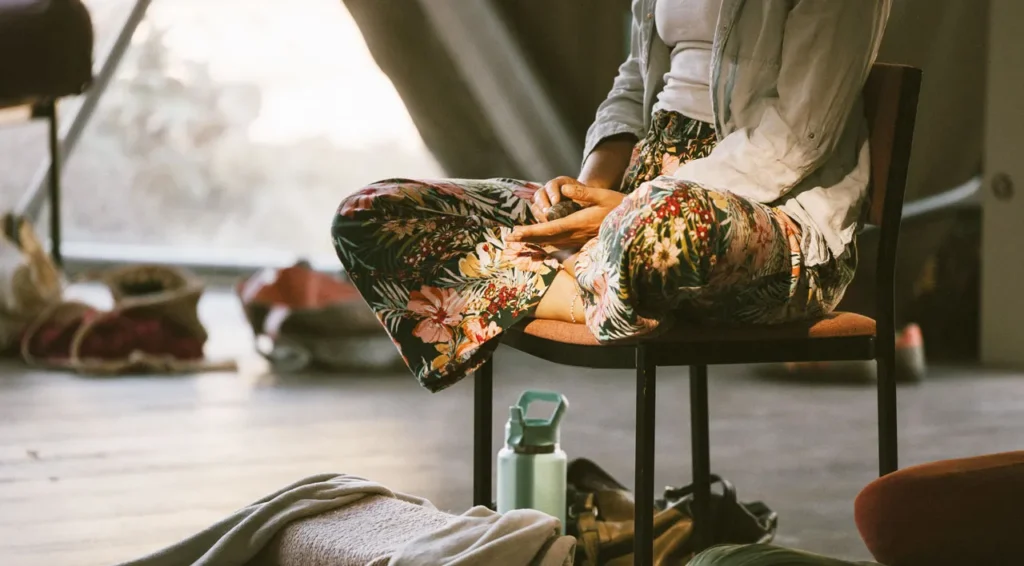
Physiological benefits – how meditation reduces stress
Many of us spend most of our days caught up in the busy thinking mind; caught in repetitive loops where we repeat the same patterns of thinking again and again – ruminating, daydreaming, negative self talk, random musings, worrying. This can have a minor or a major detrimental effect on our experience of life. If the thoughts are negative as well as being repetitive then this leads to a physiological stress, we get stuck in the fight or flight nervous system (sympathetic). Our thoughts keep us trapped here. This can have a significant impact on our enjoyment of life as well as our physical health; when we are stuck in the fight or flight nervous system many processes of the body don’t work correctly eg. sleep, digestion, immunity, hormonal health, reproductive capacity.
When we can learn through meditation to quieten the mind from thinking and to not always get stuck in repetitive patterns then our mental stress reduces, the nervous system moves into the parasympathetic which is often called the rest and digest phase of the nervous system. When we are here, our sleep improves, digestion works better, immunity and hormonal health are more likely to be in balance.
Mental benefits of meditation
We are what we practice. If I practice topspin tennis forehand I get better at it. If I am practising anxious thoughts by indulging them all the time then I get better at anxiety. One might then say “I am anxious.” We each have the personality traits that we have because we practice the thoughts associated with them. Someone who is angry as always indulging angry thoughts. Someone who is fearful is always indulging fearful thoughts. In meditation we come to see that we can change how we are by becoming more skilful at what thoughts we indulge.
With meditation for beginners one of the first skills we learn is to not chase after thoughts all the time. Instead we choose a concentration object such as the breath and repetitively make a decision to direct our attention there. When a thought arises such as “I think it would be nice to have roast chicken for dinner tonight,” we recognise that we have become distracted and direct our attention back to the concentration object ie. the breath. If we do this repetitively then we rewire a new mode of operating in the brain where we do not get caught up in thoughts all the time. We develop a greater awareness around what the mind is engaging in. If we do this repetitively (like the top spin forehand) then the mind learns and becomes more skilful at not getting caught up in and lost in thought.
So rather than 50% of my day engaging in anxious thoughts or fearful thoughts, this percentage becomes significantly less.. The result is very empowering. We are no longer captured by our negative thought patterns. There is a way out. Because we are having less of these particular negative thoughts we become less identified with being that way. So somebody who is stuck in anxiety starts to see that there is a way out – learning to control the mind.
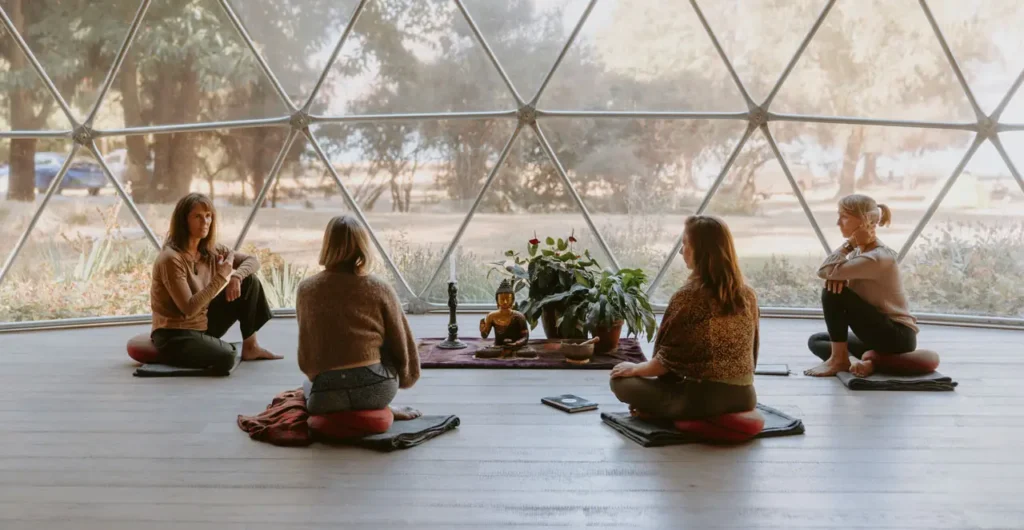
Meditation as a part of a spiritual path
In the contemporary mindfulness movement the main benefits of meditation are often the therapeutic ones such as the physical or mental benefits. However meditation, traditionally from the east, is more of a spiritual practice. Meditation is the opportunity to look a little deeper to understand what our life experience is. An experiential investigation into “What am I?” “What is the mind?” “What is experience.” Socrates described a spiritual life as ‘a life examined.’ It is our mind that dictates and perceives our life experience. Meditation as part of a spiritual practice is looking beneath the surface of the obvious and embarking on the adventure of understanding what we call ‘experience’.
How to begin meditating
The best way to start meditation for beginners is to find a teacher. It is so much more inspiring and exciting to learn in person where you can establish a relationship and get personal feedback on what you are doing and what meditation technique is best for you. At Retreats NZ we offer meditation retreats around New Zealand where you can come together with like-minded people and be guided in the progression of a life changing meditation practice.
If you would like to try something now then yes! – we have a few resources here for you.
- Sign up to our newsletter (link at the bottom of this page) and get an audio download of a meditation and instructions directly to your inbox. You will get access to 2 downloads. One has clear instructions on how to set up and begin a meditation practice at home and the other file is an audio download of the meditation practice itself.
- Sign up for a two week free trial to our online platform Entering the Stream where you can sample a 7 week Meditation for Beginners course.
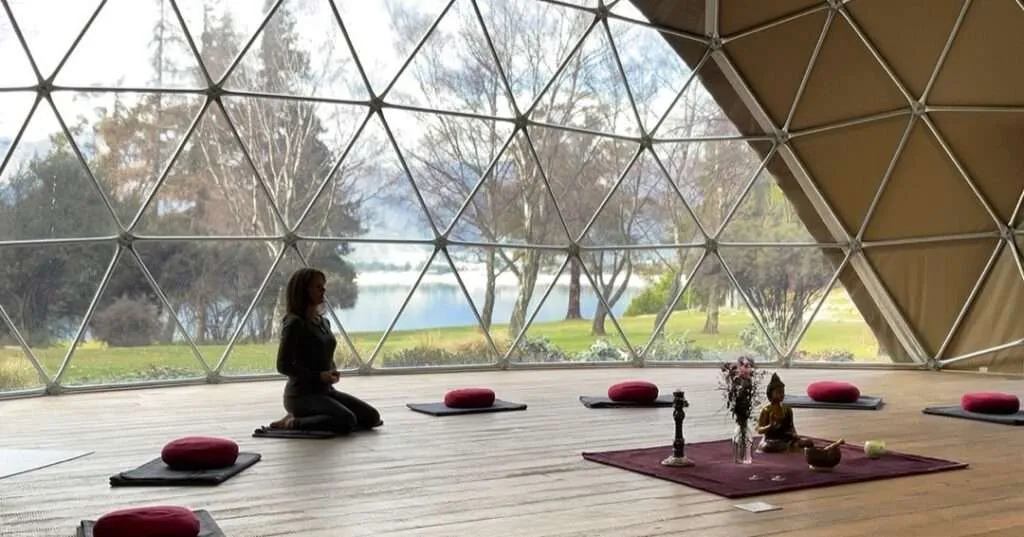
A suggested approach for Meditation for Beginners
Step 1
Meditation for beginners often begins with observing how the mind is often busy with thought. If you have recognised this habit in yourself then congratulations you are underway on the path of meditation!
Step 2
The next step is to choose a concentration object where you attempt to anchor the mind to. The most common concentration object is the breath. Focusing the mind on the sensations of the rising breath as they occur, followed by the sensations of the falling breath.
Step 3
When you do this after a few moments you will notice that the mind is no longer focusing on the breath but has moved to some distraction, often thought or some other distraction such as listening, when you notice the mind is distracted you simply bring your attention back to the breath with an attitude or friendliness to learning this new skill. Then again you will notice the mind has wandered off and again you choose to direct your attention back to the breath.
Rinse and repeat!
Don’t underestimate the significance of bringing your attention back just one time. In a 10 minute meditation practice rather than sitting and worrying for 10 minutes as might be your usual norm, when you practice bringing the attention back to the concentration object that 10 minutes worrying will reduce to 8 minutes, and then with further practice will reduce to 6 minutes, and then will keep reducing – all built on the repetitive practice of returning your attention each one time.
It is important to remember that it is the habit of the mind to think and to get caught up in thought. This will continue to be the case but will gradually reduce. Don’t get disheartened when the mind wanders, this is what you have trained it to do so far.
Tips for cultivating a regular meditation habit
Do something every day – it is suggested to begin with a 7-10 minute daily practice. Each time you sit for practice go for maximum quality over quantity. Get psyched up for it. Give it your best shot each time.
High energy time – drowsiness is a common obstacle that people come up against in meditation. It is suggested in meditation for beginners to sit at a time where the mind is brightest and your energy levels are at the highest. For most people meditating first thing in the morning is suggested before you get into your to-do list.
Pairing up – if there is something you would do everyday attach meditation to this task. For example having a shower and then meditating. If you like to have a cup of tea in the arvo or in the morning then – tea and meditation.
Get guidance from a teacher – this will help you build confidence that you are doing the practice correctly. A teacher will also be able to give you advice on more obstacles are coming up against so you will continue to progress well, this will inspire confidence and trust in what you are doing.
Patience and friendliness – What was the last new skill you learned? Patience and friendliness are great friends in meditation for beginners. The mind will get distracted many times, this is inevitable. Slowly slowly and gradually we practice returning our attention to the concentration object, the breath. With this cumulative practice the mind will calm and we will develop the skill of staying present without experience. Guaranteed! Everyone can learn to meditate when we adopt this attitude.
Resources and Tools for Beginners
- Sign up to our newsletter (link at the bottom of this page) and get an audio download of a meditation and instructions directly to your inbox. You will get access to 2 downloads. One has clear instructions on how to set up and begin a meditation practice at home and the other file is an audio download of the meditation practice itself.
- Sign up for a two week free trial to our online platform Entering the Stream where you can sample a 7 week meditation for beginners course.
Addressing FAQs
Common answers that often arise in meditation for beginners
“How long to meditate for beginners?”
Start with 7-10minutes. Go for high quality rather than a longer practice. Use a timer so you don’t need to check the time during the practice.
“Can I meditate lying down?”
No. Lying down tends to induce sleepiness. Meditation is more about cultivating mind control as opposed to relaxation. The best posture is one where the spine is sitting upright, unsupported and you can be as comfortable as possible. The best position for most is sitting on the front edge of a chair. Only sit on a cushion on the ground if you can sit with an upright spine and be completely comfortable.
“My mind keeps wandering, it feels like I’m constantly distracted. What should I do?”
It is normal for the mind to wander, this happens to everybody. The most important thing is to understand this and sustain a friendly attitude in your meditation. Each time you notice the mind wanders, with a lightheartedness return your attention to the concentration object, the breath and begin again with the one-pointedness.
Another suggestion is to intensify the focus which means to look for more detail in the sensations of the breath. This becoming more intimate with the object of focus will help to keep the mind more steady and make it less likely to wander off to thought. See if you can feel more detail in the sensations of the breath, for example where in the body does the inhalation begin, or what sensations happen at the end of the inhalation. Look more closely, have more curiosity as to the detail of the sensations.
“I often get sleepy and it’s hard to focus”
Drowsiness is a common obstacle in meditation. Some practical considerations are to make sure you practice at a time when your energy is the brightest and you feel most alert. Practising with the eyes open is a superior practice to practising with the eyes closed. Have the eyelids slightly open so there is some light coming in. If you are often drowsy have the eyes more open and the gaze on the horizon somewhere, the gaze is soft. Meditating with the eyes open will also help you to integrate the practice into everyday life, so it is not such an internal practice.
Want to join us for an in-person learning experience?
Check out our upcoming retreats page. We have meditation retreats around New Zealand which cater specifically for beginners.